
Reducing Conveyor Noise: The Impact of Bias Lace Splicing
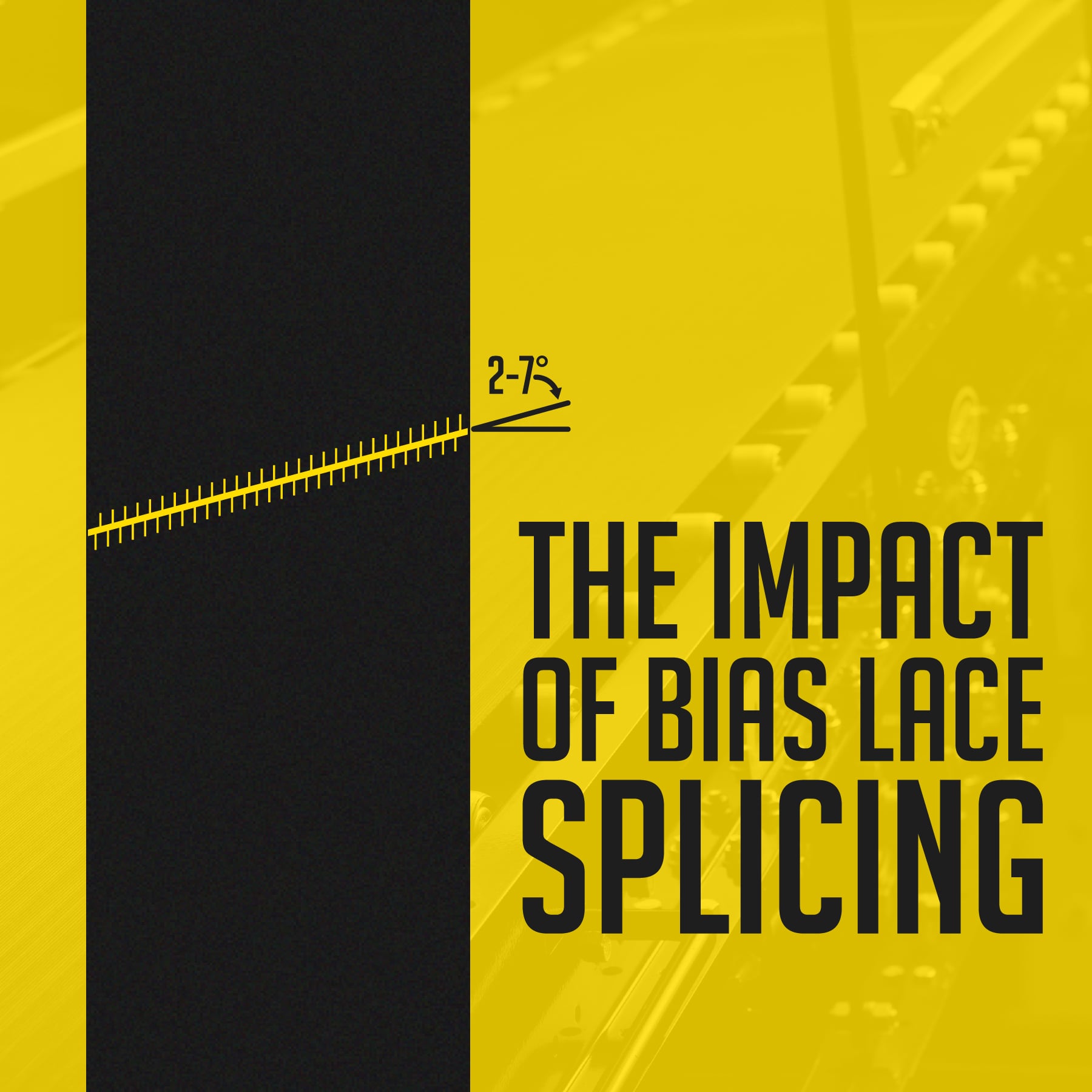
Conveyor belts are the unsung heroes of many material handling systems, quietly and efficiently transporting goods from one point to another. Yet, as conveyor speeds increase, so does the potential for noise disruption in the workplace. This is where the art of bias lace splicing comes into play.
Manufactured in large bulk rolls, conveyor belts undergo a transformation process before fitting onto specific conveyors. Initially, they are slit to standard widths and stored until cut to the required length. The exact length of the belt is generally twice that of the conveyor plus some excess for maneuvering around drive, take-up and end pulleys. Once the exact length is determined, the belt then must be joined at the ends to form a continuous loop.
Traditionally, conveyor belt ends were cut at right angles to the length and joined using mechanical lacing or adhesion. Yet, as conveyor speeds soared past 100 feet per minute, a new problem arose: noise. The impact of steel lacing against rollers and pulleys created a distracting cacophony reminiscent of vehicle tires slapping expansion joints on a concrete highway while driving at a high rate of speed.
To combat this noise, conveyor manufacturers turned to bias-cut splicing. By angling the ends of the belt relative to the rollers and pulleys, the slapping noise was significantly reduced. The angle of bias typically ranges from 2 to 7 degrees, ensuring smooth flow over the components rather than direct impact.
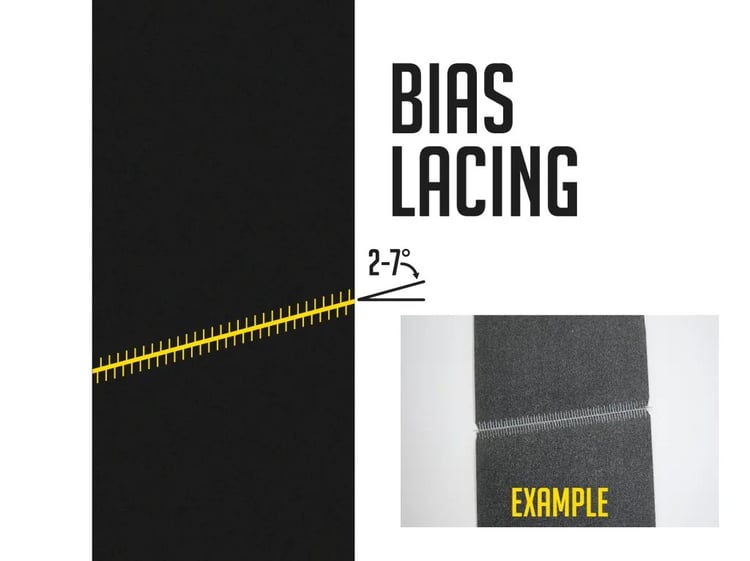
Maintaining consistency in the exact angle of each end of the belt that will be joined is crucial for proper tracking of the belt once installed and running. The exact degree of the bias is not critical, although ensuring both ends match precisely is a requirement. Additionally, when replacing belts, it’s imperative to use a belt that matches the characteristics of the original belt including having the bias lace type to minimize noise disruption of a replacement belt.
When cutting belts squarely or on a bias, precision is key. While tensioned belts may exhibit a slight wave due to pulley crowns, this doesn’t affect performance. However, selecting the correct mechanical lace type is paramount. Carded lacing is essential for bias-laced belts, offering flexibility crucial for navigating pulleys and rollers without failing. Unibar lacing will self-destruct over time when installed on a bias-cut belt.
In summary, bias lace splicing is a simple yet effective solution for reducing conveyor noise, especially at high speeds. By angling the splice away from parallel alignment with rollers and pulleys, noise disruption is minimized, enhancing the workplace environment. And remember, when it comes to bias lace, precision and the right type of lacing are the keys to success.