What is a Conveyor?
Hytrol is a conveyor manufacturer, and our blog contains a lot of information pertaining to conveyance. But what really is a conveyor? What types are there? Why are they important? If you’re new to the complex world of material handling, this guide provides an extensive but beginner-friendly overview of conveyor systems. It explains their operation, benefits, essential components, and other factors to consider if you think such a system may benefit your business.
So, What is a Conveyor?
A conveyor is a mechanical device designed to transport goods, materials, or products from one location to another. These systems are vital to numerous industries such as manufacturing, distribution, logistics, food and beverage, and ecommerce by streamlining the movement of items and enhancing efficiency and productivity. Basically, conveyors get products or goods to a desired location in a timely manner.
How Do Conveyor Systems Work?
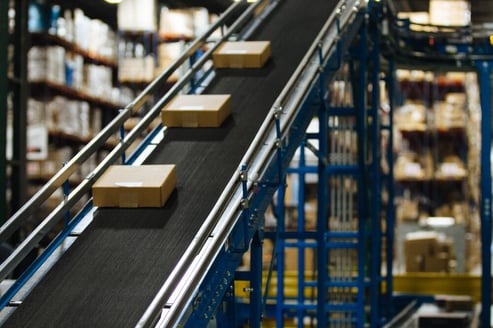
Conveyor systems operate on a straightforward yet effective principle. They consist of a belt, rollers, chain, or other moving surface that transports items or materials along a predetermined path. The movement is powered by a motor, which drives the surface, facilitating the transportation process.
Several common types of conveyor systems are designed for specific applications:
- Belt Conveyors: Uses a continuous loop of material (belt) to transport items.
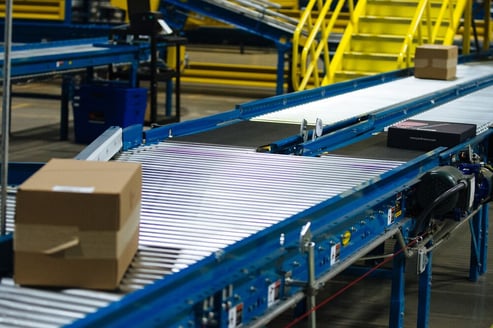
- Roller Conveyors: Utilize rollers instead of a belt for more robust loads or bulky items.
- Sliding Shoe Conveyors: Use special diverting mechanisms called “shoes” that run along aluminum slats to sort items from the left, right, or both directions simultaneously.
- Chain Conveyors: Consist of interlocking chains that transport items or materials.
- Gravity Conveyors: Rely on gravity to move items and are ideal for downward slopes or manual operations.
Essential Parts of a Conveyor System
A conveyor system consists of many moving parts that work together to facilitate the movement of materials. Understanding these parts is crucial for comprehending how a conveyor functions.
-
Belts: At Hytrol we do not make conveyor belts. That is one of the common misconceptions when explaining our company to others. Though Hytrol outsources our belts, it is still a primary component in many conveyor systems. These belts are continuous loops of material that rotate around two or more pulleys. They can be made from rubber, fabric, metal, or plastic, depending on the application and type of material being transported.
-
Pulleys: Pulleys drive conveyor belts and control speed. They are used to change the direction of the belt and provide tension for smooth operation.
-
Rollers: Rollers support and guide the conveyor belt, ensuring smooth movement. Some conveyors use live rollers instead of belts to convey product. Rollers work extremely well with heavy product and flat, stable bottoms. Rollers are typically made from durable materials such as steel to withstand heavy-duty operations.
-
Motor: The motor provides the necessary energy to move the conveyor. Conveyors without a motor are called gravity conveyors because they rely on gravity or manual manipulation to move.
-
Control Systems: The control system regulates conveyor operations. Advanced control systems optimize performance, allowing for precise control of speed, direction, and other variables. Control systems can vary greatly depending on application and do things from stopping and diverting packages to weighing and scanning barcodes.
Benefits of Conveyor Systems
Conveyor systems can help increase production, reduce costs, and improve safety. Let’s take a closer look at how that’s accomplished.
-
Increased Efficiency and Productivity: Conveyor systems streamline operations by automating the movement of materials, reducing the need for manual handling. This automation results in faster processes, enabling businesses to meet higher production demands.
-
Reduced Labor Costs: Implementing conveyor systems can lead to significant cost savings by minimizing reliance on manual labor. Automated material handling allows for higher throughput rates. This does not mean robots are replacing us! With fewer employees needed to push or carry boxes, workers can shift focus on other areas of the operation.
-
Improved Safety and Ergonomics: Manual handling of heavy or bulky items can pose risks to employees, leading to injuries and workplace accidents. Conveyor systems provide a safer alternative by minimizing the need for manual lifting, pushing, or pulling. This helps prevent strain-related injuries and creates a more ergonomic work environment.
At Hytrol, we understand the importance of conveyor systems to the global supply chain. Our range of high-quality conveyor solutions is designed to meet the unique needs of your business. View these case studies to see how Hytrol has helped other businesses to thrive.
Types of Conveyor Systems
Conveyor systems are essential for the efficient movement of materials or products. Here are some common types based on functionality:
-
Transportation Conveyors (view more): These conveyors have a variety of uses, but their main goal is to move product where you need it to go. They use rollers, belts, drag chains, and more, and can be powered or non-powered.
-
Accumulation Conveyors (view more): This type of system is generally segmented into zones to allow conveyed products to stop or collect at will. These conveyors are used to hold or buffer products into areas such as merges, sortation, or palletizers.
-
Sortation Conveyors (view more): Moving products quickly and efficiently, these conveyors sort items into other lines in a system. Sorters can use pushers, wheels, or sliding shoes to achieve high throughput rates.
-
Pallet Handling Conveyors (view more): These heavy lifters of material handling are designed to move pallets and other heavy-duty loads on belts, chains, skatewheels, or rollers. Their main function is to convey these loads safely, increasing system throughput.
How to Choose the Right Conveyor System
Budget certainly plays a role in selecting the right conveyor system for your business, but there are also several other important factors. By understanding these considerations, you can make an informed decision that meets your industry and application requirements.
-
Assess Your Needs: Different industries have specific demands, such as food processing, manufacturing, or e-commerce. Each industry requires a conveyor system that can handle its unique challenges. Consider factors like the type of material being conveyed, environmental conditions, and any special requirements.
-
Evaluate Capacity and Throughput Requirements: Determine the volume of products or materials that need to be transported within a given timeframe. This will help you ascertain the conveyor’s speed, load capacity, and any additional features required to meet your production goals.
-
Consider Customization and Integration Capabilities: Every business has unique workflows and processes. Look for a conveyor system that can be customized to fit your specific needs, including options for conveyor length, width, and configuration. Additionally, ensure the conveyor can integrate seamlessly with your existing equipment and systems, such as automated sorting, weighing, or packaging machines.
Hytrol Leads the Way
Choosing the best system to meet your needs can be a tall order. Businesses working with Hytrol can benefit from our Integration Partner Network to help make those decisions easier. Much like an automotive manufacturer, Hytrol does not sell direct. Instead, our partners apply their knowledge of conveyance and expertise of various industries to help our customers where your project is located. We focus on the manufacturing of our products to ensure peak quality and provide assistance after the sale.
We hope you enjoyed this introduction to what automated solutions are and what they can achieve for your business. If you’re interested in learning more about Hytrol and the solutions we provide, please reach out to our talented network of Integration Partners today.