
Preventing Premature Wear Through Proper Timing Belt Tension
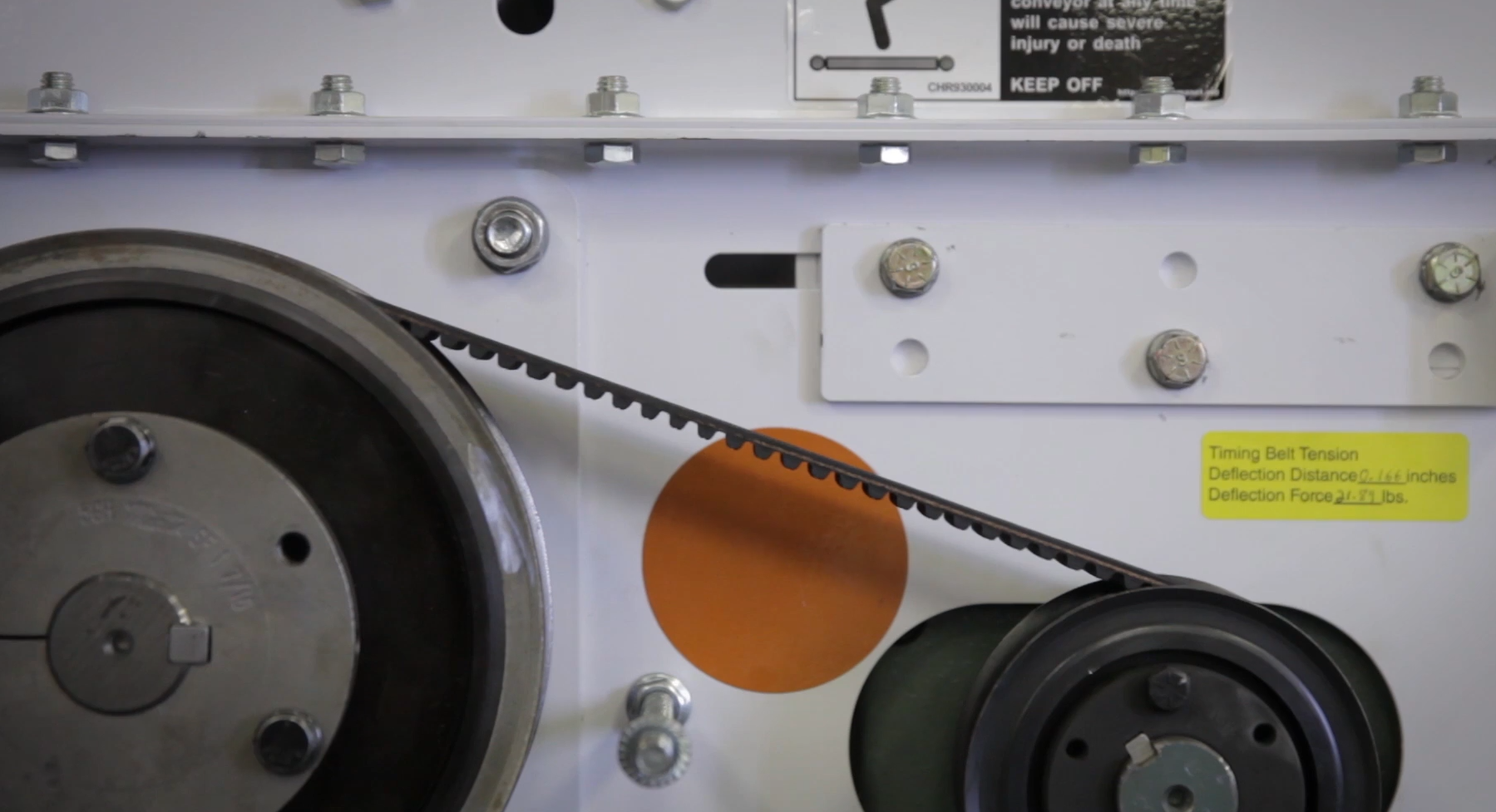
Timing belts play an important role in the performance of many conveyor systems. They transfer power, provide synchronized movement, and help ensure products move smoothly through the system. While timing belts are designed for long service life, improper belt tension is one of the most common causes of premature wear and unexpected downtime.
Whether a belt is over-tensioned or under-tensioned, incorrect tension places unnecessary stress on both the belt and the conveyor's drive components. Establishing and maintaining proper tension helps extend component life, improve reliability, and reduce maintenance costs.
Why Proper Timing Belt Tension Matters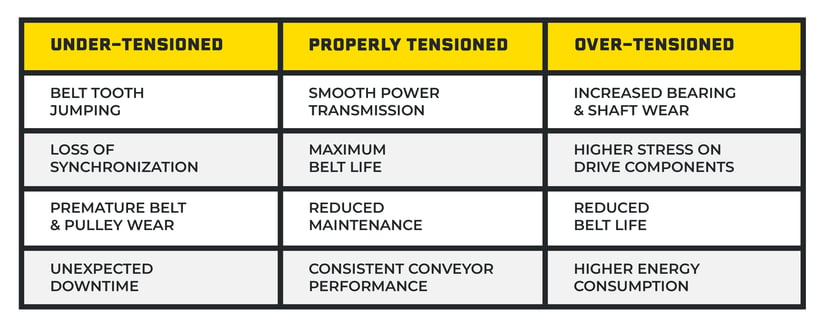
Proper timing belt tension is the minimum amount of tension required for the belt to operate without skipping or losing engagement with the pulley. When correctly tensioned, the belt can transmit power efficiently without placing unnecessary stress on the belt or surrounding components.
Too little and too much tension can affect the conveyor in different ways. Understanding these differences helps identify tension-related issues and address them before they lead to premature wear or downtime.
Signs Your Timing Belt Tension Needs Attention
Routine inspections can help identify tension-related issues before they become costly failures.
Watch for signs such as:
- Excessive belt vibration
- Unusual noise during operation
- Belt tooth wear or fraying
- Inconsistent conveyor performance
- Belt tracking issues
- Visible pulley wear
- Premature bearing failures
Best Practices for Setting Belt Tension
Correct timing belt tension starts with proper conveyor setup. Factors such as conveyor alignment, squareness, and levelness all affect how a belt performs over time. Following the manufacturer's installation recommendations helps ensure accurate belt tracking and long-term reliability.
General best practices include:
-
- Follow lockout/tagout procedures before making adjustments
- Inspect the belt and pulleys for wear or damage before tensioning
- Use the recommended tension measurement method or tension gauge when specified
- Make small, even adjustments on both sides of the conveyor
- Rotate the conveyor manually after adjustment to allow the belt to seat properly
- Run the conveyor under normal operating conditions and verify smooth, quiet operation
For a closer look at the process, check out this Ask Hytrol video demonstrating how to determine proper timing belt tension.
Preventive Maintenance Extends Belt Life
Proper belt tension is only one part of maintaining a healthy conveyor system. Incorporating timing belt inspections into routine preventive maintenance can help identify wear before it affects production.
During scheduled maintenance:
- Inspect the belt for cracks, frayed edges, or damaged teeth
- Check pulleys for excessive wear or debris buildup
- Verify belt alignment and tracking
- Confirm belt tension remains within the recommended range
- Replace worn components before they damage other parts of the system
Routine inspections can help maintenance teams catch small issues before they lead to belt or component failure. Ongoing training, such as Hytrol's seminars, help maintenance teams build their knowledge of conveyor inspection, adjustment, and troubleshooting.
Keep Your Conveyor Running Reliably
Maintaining the correct timing belt tension, inspecting components regularly, and addressing wear early can help prevent unexpected failures and keep conveyor systems operating reliably.
Need assistance with timing belt maintenance or replacement? Contact Hytrol's Customer Care team for additional maintenance resources and service information.